
Zorro’s Three-Foot World
In his book No Hero, Mark Owen shares some of the lessons he learned from his experience as a Navy SEAL. On one occasion, during his training, Mark’s team traveled to Red Rock Canyon near Las Vegas, where he had to climb a rock hundreds of feet high. On his ascent, he panicked. The trainer climbed up to help.
“Hey, man,” the trainer said in a lazy, raspy voice. “Just stay in your three-foot world.”
I was a couple of hundred feet up the rock face and I could barely think, let alone decipher his cryptic advice.
“What are you talking about, bro?”
“Only focus on your three-foot world,” he said. “Focus on what you can affect. You keep looking around, and none of that can help you right now, can it?”
I shook my head no.
“You’re calculating how far you’re going to fall,” the instructor said. “You’re looking down at Jeff, but he’s not going to come up and help. You’re looking out at the Strip. What are you going to do, gamble your way to the top? Don’t look at me. I’m not going to help you either. This is up to you. You’re climbing this rock. Stay in your three-foot world.”
Shaun Achor describes a parallel idea in The Happiness Advantage. He retells a story from the life of the legendary Zorro. When Don Diego became the mentor for a young Alejandro (aka Zorro), he drew a circle in the dirt and said to Alejandro, “This circle will be your world. Your whole life. Until I tell you otherwise, there is nothing outside of it.” As his training evolved, once Alejandro mastered what was in the circle, Don Diego would allow him to attempt greater things. Anchor identifies how research continues to support the value of focus and how it can enhance both personal happiness and success in the marketplace. He challenges the reader to focus on their own Zorro Circle.
Both authors echo the multiple deep dives into this idea by organizational guru Jim Collins. After decades of his own research, the conclusions remained consistently clear. Disciplined leaders have the ability to surround themselves with discipled people, who entertain disciplined thoughts, and thereby pursue disciplined action.
In such a diverse and opinionated world, it’s always refreshing (and surprising) to discover an idea that every researcher and expert seem to agree with. It’s even more surprising when they all agree with Jesus. Recognizing and then focusing on what is directly in front of us can help mitigate the amount of anxiety that life’s cumulative challenges can generate. Jesus said it first and He said it best. (And He never needed to cite research to back up His words.)
“Do not worry about tomorrow, for tomorrow will worry about itself. Each day has enough trouble of its own.” (Matthew 6:34)
We could (and probably should) have multiple applications for this idea of life-focus, but the Oikos Principle is one of its many corollaries. No one cannot do everything. We all could do many things. But each of us can only do a few things well. In Oikworld, that means focus on the people you have the greatest chance of influencing and trust that God will use others to influence the rest.
As I wrote in 8 to 15, “If you think your job is to witness to everybody, then you’re probably not witnessing to anybody.”
Google “three-foot world” and chances are you’ll see this ven-diagram pop up more than once.
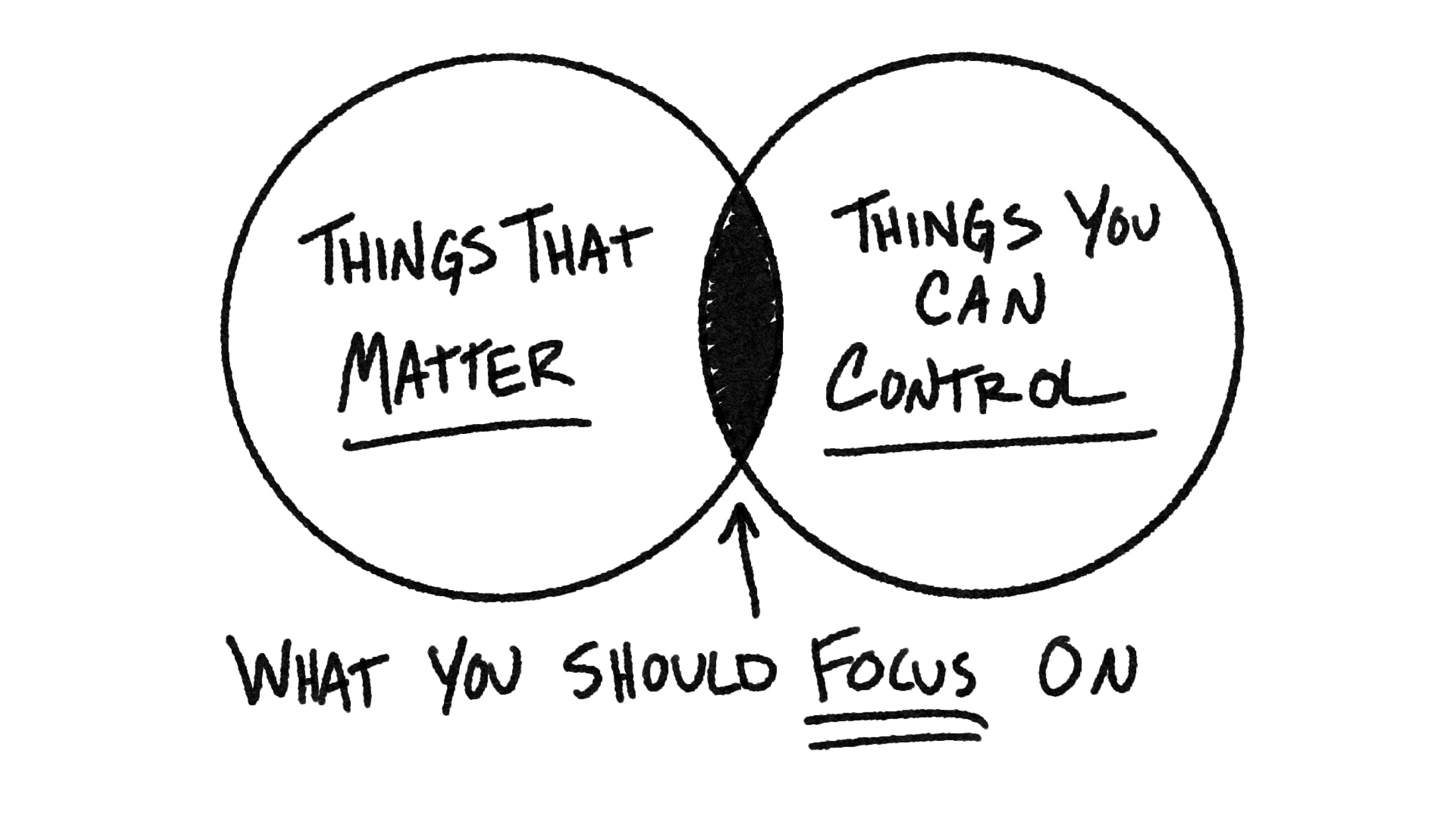
People matter to God. That part is easy. And, odds are, none of us will change the entire world today. But we all have been given a platform to significantly influence our part of it, the 8 to 15 people living inside of our own Zorro Circle right now.